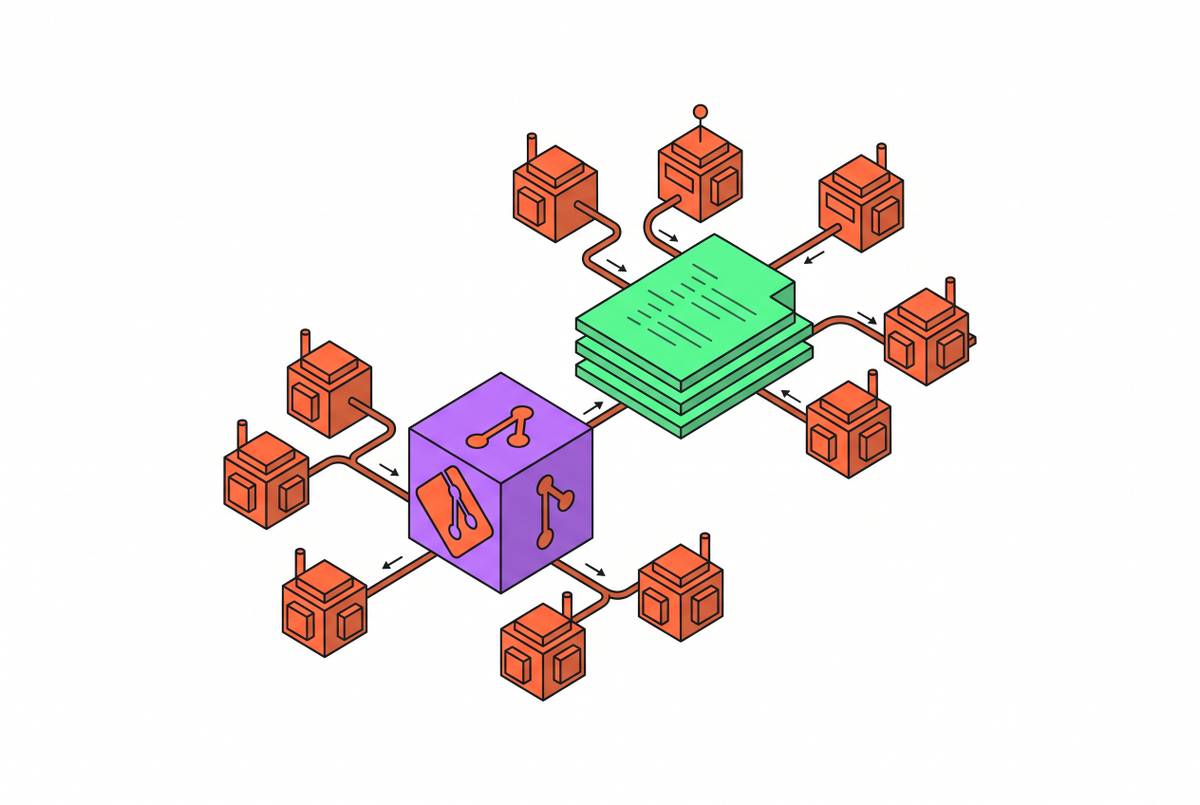
Autonomous Code Documentation Generation at Engineering Scale
Treat documentation generation as governed infrastructure, not delegated writing.
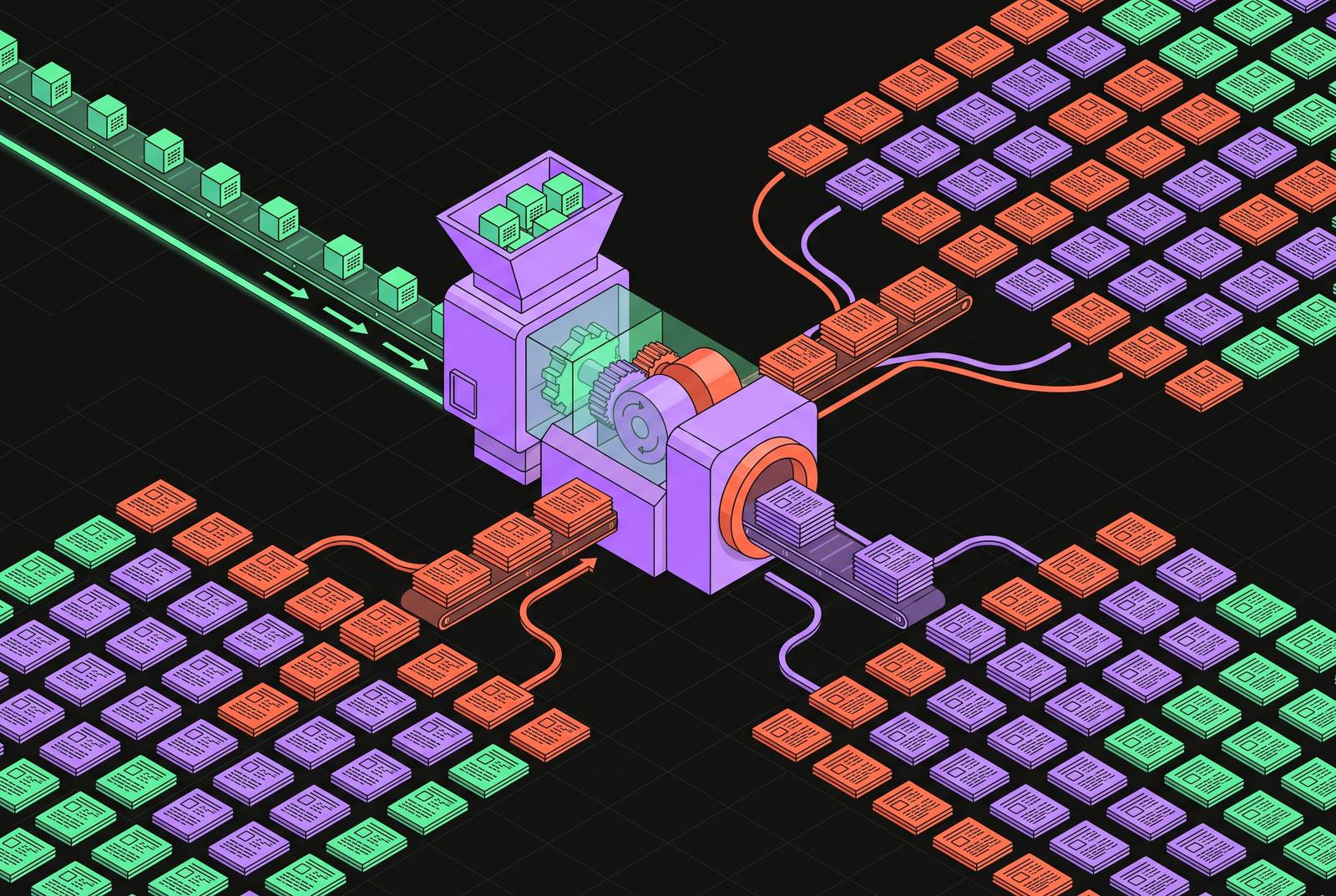
Autonomous documentation generation only works at engineering scale when it is treated as infrastructure, not as a writing task delegated to a model. Teams that get this right treat their documentation agents as version-controlled configuration: they run them in scoped, auditable environments, and they hold the output to the same review standard as any code change. That is the argument this piece makes, and the rest of it builds the case for why.
Documentation as an engineering-scale infrastructure problem
Documentation debt has always been framed as a discipline failure: engineers know they should write docs, and they don't get to it. That framing no longer holds at engineering scale, because the velocity of agentic development has outpaced any workflow that depends on a person remembering to write something down afterward. Traditional stages of the software development lifecycle still exist, but the slack that used to make "we'll document it later" a survivable habit has disappeared along with the time between those stages.
The same report finds that engineers can fully delegate only a small fraction of their daily tasks, with AI functioning as a constant collaborator requiring active supervision. It is not a task engineers will spontaneously hand off on their own initiative. It has to arrive as an automated output of a governed workflow, built into the development loop.
The Rakuten case shows what this looks like at real scale. A machine learning engineer let Claude Code run autonomously inside a 12.5-million-line codebase, and it finished a complex implementation in seven hours with only occasional guidance. At that size and that speed, no manual documentation process keeps up. Documentation generated as a side effect of a governed agent run is the only approach that scales to match it, which makes this an architecture problem to be engineered, not a writing problem to be nagged about.
What autonomous documentation generation does inside a codebase
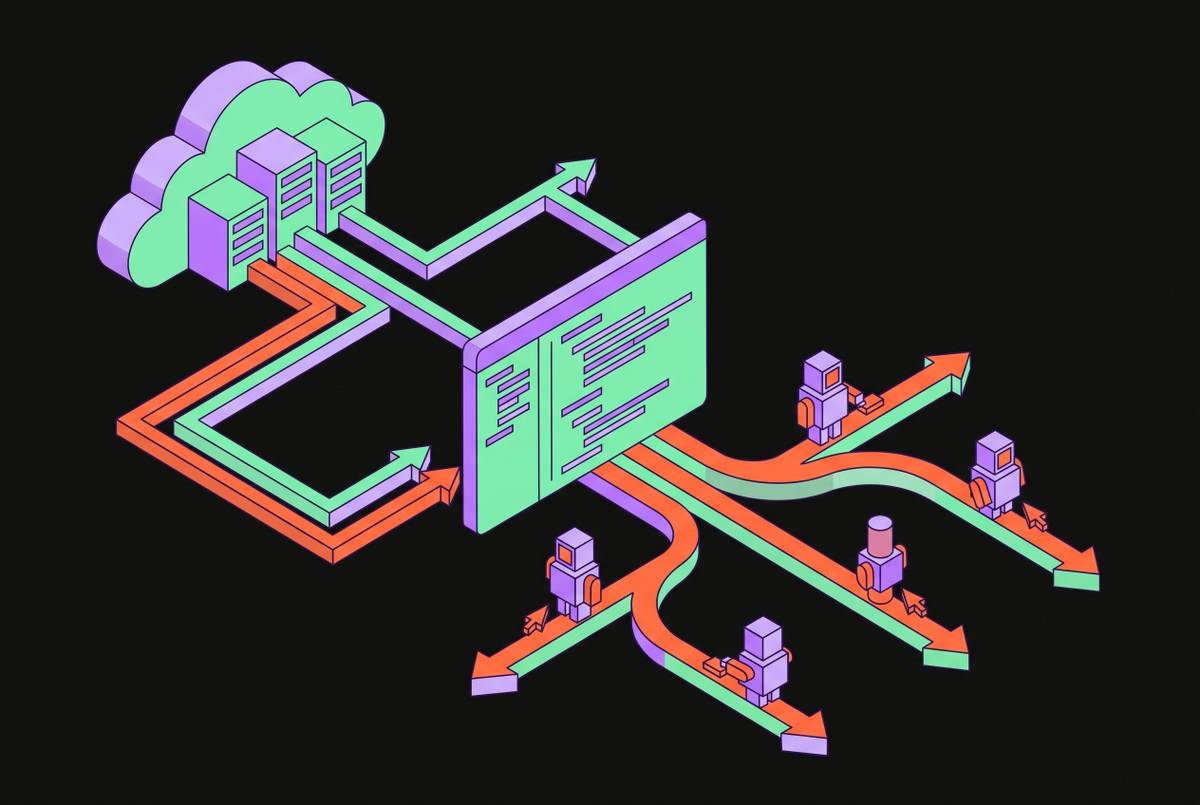
A documentation agent is a pipeline of discrete behaviors, each with its own cost, its own failure mode, and its own governance surface: retrieving context from the codebase, interpreting what changed, producing structured output, and verifying that output against the code it describes.
Research on README generation published on arXiv in July 2026 lays out the core pipeline decisions practitioners actually face: whether to run a single agent or a multi-agent system, how dependent the pipeline is on retrieval-augmented generation, and whether to include a developer-guided planning step. A single-agent pipeline can match a multi-agent system on lexical quality, but it cuts token consumption by 86% and runs at twice the speed. Multi-agent systems reach 98% structural consistency, fixing formatting problems that occur in single-agent pipelines. Which architecture wins depends on the use case. Which one is right depends on which quality dimension the output needs to optimize for.
What the agent can retrieve bounds what it can write. A documentation agent is only as good as the structural context it can pull from the codebase it is describing.
The canonical failure mode here mirrors a broader pattern in agentic coding: the agent changes behavior, then adjusts its own output to match the change it just made. If there's no verification step, you won't see that failure until someone downstream trusts a sentence that is no longer true. The 2026 Agentic Coding Trends Report places inline documentation inside the same automated loop as testing, which is the correct frame: documentation is an integrated output of an agent run, not a separate tool invoked after the fact.
Token cost and architectural choice as inseparable decisions for documentation agents
The cost of running a documentation agent is set almost entirely by architectural decisions made before the first run: single-agent or multi-agent, which retrieval strategy, which model tier, whether a planning step is included. Teams that treat these as implementation details to sort out later will find the costs uncontrollable once they scale.
The README generation study makes this concrete. The gap is the line between a documentation workflow a team can afford to run across every repository and every pull request, and one it can't. Multiplied across many repositories and many PRs a day, that gap becomes a real budget problem.
Cost doesn't concentrate where most people assume. Applied to documentation pipelines, that finding points to where the real cost driver will sit as quality gates tighten: not generation, but verification and review.
Two levers bring that cost down without giving up quality. Model tiering routes documentation agents to lighter models for routine updates, and it reserves more capable, more expensive models for complex architectural summaries or cross-file dependency analysis; you don't run everything through the most expensive available model by default. Documentation generation, handled this way, is one of the more cache-friendly agentic workloads available today, and getting the architecture right up front is what keeps the budget conversation from becoming a crisis later.
The governance gap that opens when documentation generation runs without controls
Running a documentation agent without scoped credentials, sandboxed execution, and audit logging is a decision, whether or not it's made consciously, to accept risks that compound with every single run: secret leakage in generated content, license exposure in summarized third-party code, and no way to trace what the agent wrote or why.
Secret leakage tends to be the first failure a team encounters. A documentation agent that summarizes configuration files, environment setup instructions, or API usage patterns carries the same exposure, and every piece of output it produces needs to be scanned before it reaches a repository, the same way a code commit would be.
License exposure follows the same logic. Enterprise legal teams need a policy and a scanning mechanism in place before anything merges, not a retroactive audit after a problem is found.
Razorpay's agentic system, Slash, shows what governed output looks like in practice. Every agent-authored change passes the same security and code quality gates as a human-authored one, but you can auto-approve and merge a low-severity pull request without a human reviewer in the loop. The configuration files that govern which tools an agent can invoke are themselves executable and carry developer-level privileges, and treating them as mere settings rather than code is exactly the kind of gap that opens the door to supply-chain compromise.
The stakes of skipping this are not abstract. Research into enterprise AI agent deployments finds that most pilots never reach production, and a large share of agentic AI projects are predicted to be canceled over escalating costs, unclear business value, and inadequate risk controls, not model quality. Documentation automation is not exempt from that pattern. If a team deploys a documentation agent without governance, it is accumulating a liability that someone else will eventually have to account for.
What a production-grade documentation agent infrastructure looks like
A documentation agent earns the label "production-grade" by how its configuration is versioned, how its execution is scoped, and how every output traces back to a person, a trigger, and a policy decision, not by which model it runs on or how polished its prose reads.
Configuration belongs in the repository. Structured human input belongs at the configuration layer; you don't sprinkle it into runtime decisions the agent makes on its own.
Execution should be isolated and credentials should be scoped to the session. Each documentation agent run ought to execute inside its own sandbox, with credentials minted specifically for that session and revoked the moment it finishes. Research into agentic security establishes the core principle here: separate the model client from the tools it invokes. The reasoning process runs outside the sandbox, and the tools that touch the repository, write files, or make API calls run inside it.
Budget enforcement has to live outside the agent, not inside its own logic. Every run should also carry metadata, team, repository, environment, and trigger, from the start, since an aggregate monthly bill won't show which repositories or which triggers are actually driving the spend.
Every output needs a full audit trail. Every tool call, file write, and diff a documentation agent produces should be logged and attributed to the person or trigger that started the run, and that log should capture what context, policies, and data governed it, so a documentation change can be reconstructed and explained. Agent lifecycle transitions, from declared intent through dispatch to commit or failure, should carry precise timestamps, so that a post-incident review can reconstruct what happened.
Secret scanning and license checking belong in the pipeline; they are not optional gates. A documentation agent should run secret scanning on every pull request before it merges, just as a code PR would, and it should run license scanning wherever it summarizes or describes third-party code; the acceptable-license policy and remediation process need to be set before the agent ever runs.
How Ellipsis runs documentation agents under the governance model described above
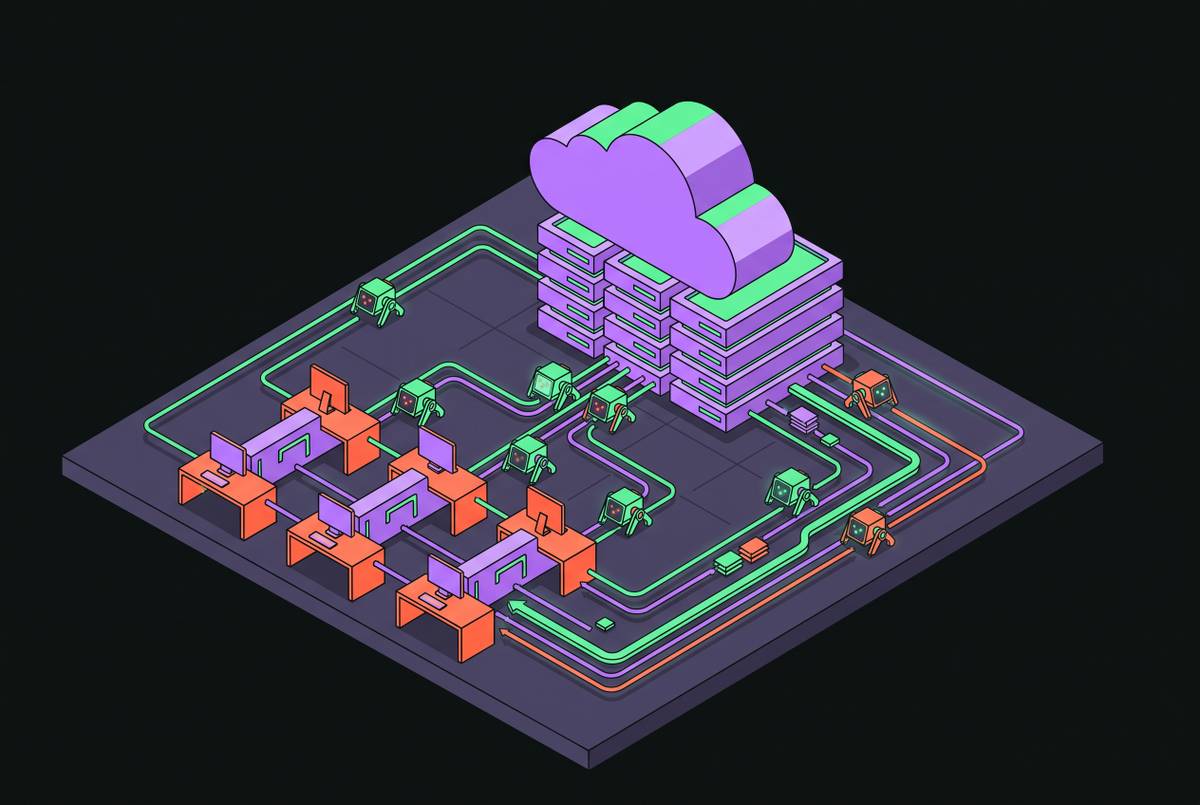
Ellipsis is a managed cloud platform for running Claude Code, Codex, and other coding agents, and it operationalizes the model described above directly: agents defined as YAML config files inside the repository, executed in isolated cloud sandboxes with credentials scoped to each session, and governed by hard budget caps and full audit logging. The goal is for a team to deploy documentation agents at engineering scale without building that infrastructure from scratch first.
Agent behavior, scope, model, retrieval strategy, output format, and approval gates, lives as a YAML file checked directly into the repository. It is versioned, reviewed, and subject to the same change management as any other engineering artifact. That structure is a direct implementation of the developer-guided planning pattern the README generation research identifies as the highest-quality configuration available: structured human input set at the configuration layer, with autonomous execution handled at runtime.
Each agent session runs in its own isolated sandbox, with credentials minted for that session and revoked once it ends, and every tool call, diff, and token gets logged and tied back to the person or trigger that started it. The canonical failure mode described earlier, an agent quietly rewriting its own output to match a change it just made, becomes detectable rather than invisible, because the session log shows what context the agent had and what it adjusted. A team might configure an agent to trigger on every merged pull request, generate an updated documentation diff inside a sandbox, and open that diff as its own PR with the full session log attached for review.
Budget caps are enforced at the session, agent, and developer level, not just monitored after spend has already happened. That distinction, cost control versus cost awareness, is the one that matters: the research describes Uber exhausting an annual AI budget in four months as a case of cost awareness without enforcement, a different failure than having no visibility. Engineers can trigger, monitor, and govern these agents from the terminal, Slack, GitHub, Linear, or API, meeting teams in the tools they already use.
Where single-agent and multi-agent documentation architectures each belong
You don't choose between single-agent and multi-agent documentation pipelines by picking the one that produces better output in a vacuum. It's a matter of matching the architecture to the repository's documentation needs, the team's capacity to review output, and the governance overhead each architecture demands.
The README generation study lays the trade-off out empirically. Layered over either architecture, a lightweight developer-guided planning step produces the highest overall quality across every configuration tested, which is the reasonable baseline for any documentation agent running in production, regardless of which architecture underlies it.
The governance implication follows directly from the architecture. Teams should adopt multi-agent documentation pipelines once they have the observability infrastructure to match that complexity, but not before.
If a team starts today with a governed single-agent documentation pipeline, it builds the foundation it needs to extend into multi-agent architectures as its infrastructure matures, rather than inheriting a governance debt later that it can't repay on short notice.
Treating documentation agent output as governed engineering output, not generated text
If an autonomous documentation agent runs without governance, its output looks authoritative but can't be trusted, traced, or defended under scrutiny. The value of that output is inseparable from the auditability of the process that created it.
Razorpay's Slash system is the operational benchmark: every agent-authored change passes the same checks as a human-authored one. Documentation PRs generated by an agent should go through secret scanning, license checking, and structured review, because a governance habit applied uniformly across every kind of output is the one that actually holds up under pressure.
The Agentic Coding Trends Report states the strategic gap: organizations that learn to scale human oversight without creating bottlenecks are positioned to maintain quality while moving faster than teams that can't. Documentation automation is one of the clearest places to build that muscle: documentation PRs carry lower stakes than production code changes, so they make a practical proving ground for the governance model before you apply it somewhere riskier. The same report predicts that onboarding timelines will collapse as agents make codebases more navigable, but that prediction only holds if the documentation those agents produce is trustworthy, current, and attributable to a specific run.
The teams that solve documentation at engineering scale won't be the ones running the most sophisticated models. They'll be the ones applying the same version control, scoped execution, budget enforcement, and observability to documentation that they already apply to every other engineering workflow, on a platform, such as Ellipsis, built to run that workflow as infrastructure.