Git Worktrees vs Git Submodules for Agent Isolation
Worktrees isolate parallel agent work; submodules manage cross-repo dependencies.
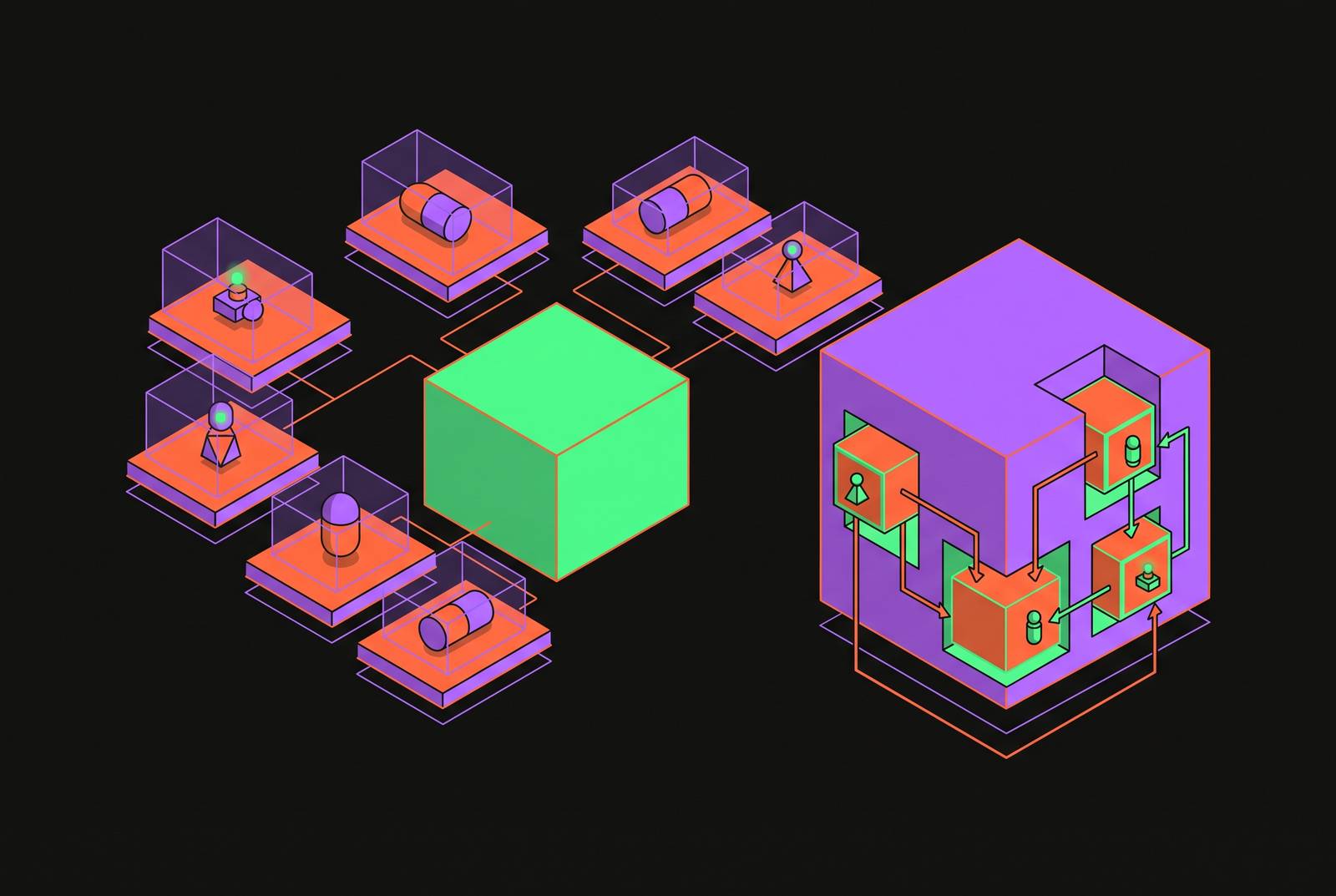
Two agents, one repo: Agent A builds an auth flow while Agent B refactors the API layer, and both end up touching utils.ts at the same time. Neither agent intends to step on the other's work, yet the result is a mess that looks intentional from the outside and confusing from the inside. This is the concurrency problem that git worktrees and git submodules get confused for solving together, when in fact only one of them addresses it at all.
The failure modes are specific. A shared working directory means the second write wins, so the first agent's changes disappear without a trace and neither party notices. Agent B can read Agent A's uncommitted, half-finished edits and build downstream logic on assumptions that were never true. Build caches, test databases, and config registries become contested territory the moment two processes touch them concurrently. And if one agent holds a git lock while crashing, other agents attempting git operations in the same repository can be blocked until the lock is cleared. What ties these failures together is silence: agents don't throw an exception when context goes bad. They proceed, confidently, on corrupted assumptions, which is worse than a crash because nobody knows to look.
This is a concurrency problem, not a dependency problem, and that distinction is the whole argument. Worktrees and submodules get lumped together in conversation because both involve "extra directories" and both show up in discussions about repo structure. But they solve different problems entirely, and knowing which one applies is what decides whether a multi-agent setup runs cleanly or corrupts itself quietly. The rest of this piece works through that distinction, and what it takes to isolate parallel coding agents in practice.
What git worktrees actually are and how they create filesystem-level isolation
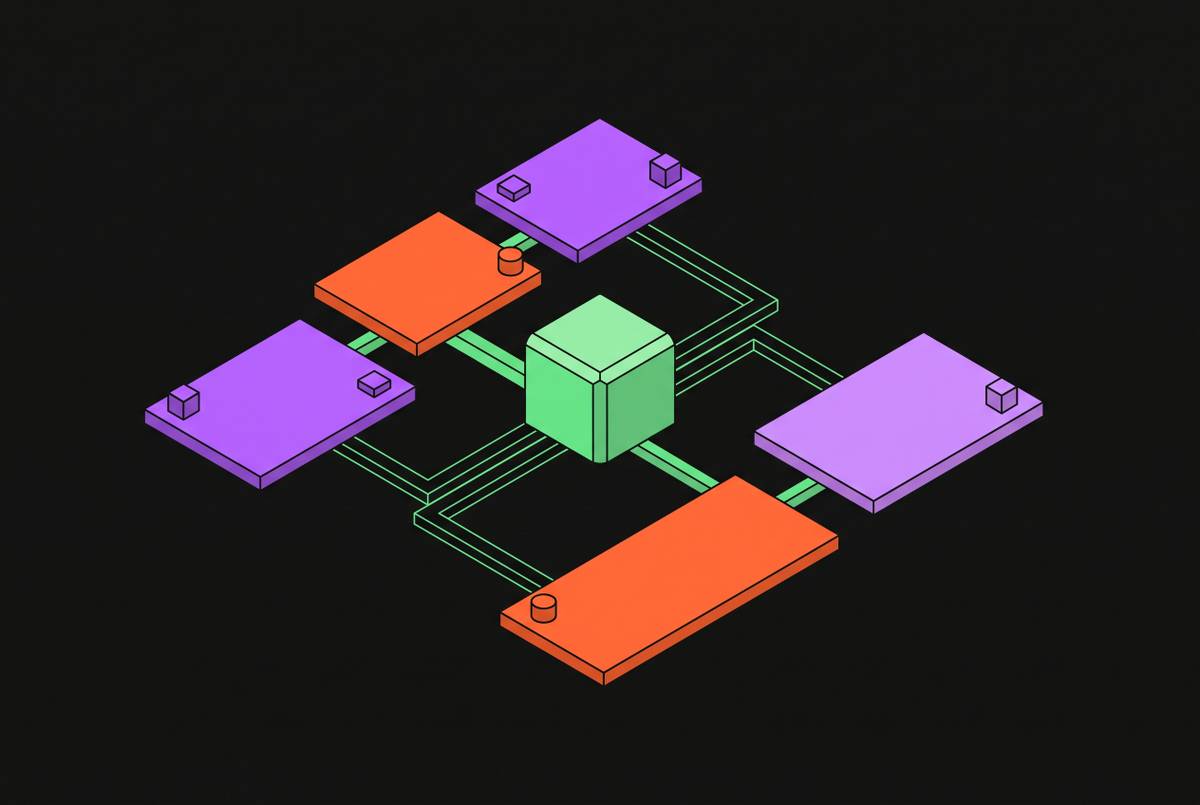
A git worktree is a linked working directory that shares the same .git object store as the main checkout. Same repository, same history, same commits, but a separate set of files on disk that an agent can edit without touching anyone else's copy.
Mechanically, each linked worktree contains a .git file, not a folder, with a single line pointing back to the main repository: gitdir: . HEAD and the index are private to each worktree, so each one can be on a different branch with different staged changes. But the object store, refs, config, stash, and hooks are shared across all of them. That's the design: duplicate only what needs to differ, share everything else.
Compare that to cloning the repo multiple times, which is the naive alternative. A clone duplicates the entire object database, every commit, every blob, every tree, for every parallel session. On a large repository, that adds up fast in both disk space and clone time. Worktrees sidestep that by sharing history and objects, and duplicating only the working files an agent actually needs to edit.
The isolation property that matters here is physical. An agent editing files in my-project-feat-auth/ cannot touch files in my-project-refactor-api/, because they are different directories on disk. Conflicts don't vanish, but they move to merge time, where standard git tooling can detect and surface them, instead of happening silently while both agents are mid-task.
Setting one up is a few commands: git worktree add -b feat/auth ../my-project-feat-auth main creates a new worktree on a new branch. git worktree list shows what's active, git worktree remove tears one down, and git worktree prune cleans up stale references. None of this coordinates who works on what, though. Filesystem isolation is necessary but not sufficient: a shared task list still has to handle which agent owns which piece of work, so that the isolation isn't just physical separation of agents that were going to collide anyway.
What git submodules actually are and the problem they were designed to solve
A git submodule embeds one repository inside another. Concretely, it's a pointer to a specific commit in an external repository, tracked as a gitlink entry in the superproject's tree, with .gitmodules recording the submodule's path and source URL.
The problem submodules solve is dependency composition across repositories. A team wants to pin a shared library, a design system, or a configuration repo at a known, specific commit inside a consuming project, and update that pin deliberately when ready. That's a real and common need, and submodules have served it for a long time.
What submodules are not is any kind of concurrency mechanism. There is no concept, anywhere in the submodule model, of multiple people or processes working on the same repository at the same time. A submodule describes a static reference relationship between two repositories, full stop. It says nothing about who's editing what, or when.
So the structural line is clean once you see it: worktrees address concurrency within a repository, submodules address composition across repositories. These are orthogonal concerns, not competing solutions to the same problem. They get confused because both involve extra directories and both come up in conversations about repo layout, but the layer they operate on is completely different. One is about parallel work. The other is about pinned dependencies.
Where submodules actively make worktree-based agent workflows harder
Submodules don't just fail to help with agent isolation. In a worktree-heavy setup, they add real friction.
Each worktree gets its own submodule checkout. That means submodule content, which can be sizable, multiplies across every parallel agent session running in its own worktree. Every parallel agent session means another full copy of every submodule.
Worse, none of it happens automatically. git submodule update --init --recursive has to run explicitly inside each new worktree, because submodule initialization doesn't propagate the way shared refs do. That's a required step in every provisioning sequence, and it's exactly the kind of step an autonomous agent is likely to skip or mishandle, since it's not part of the core git worktree flow it might expect.
For teams building repositories meant to support multi-agent worktree workflows, the practical move is to prefer git subtrees or straightforward vendoring over submodules where possible. Neither carries the per-worktree initialization burden. The verdict here isn't ambiguous: submodules are not a competing isolation strategy for agent workflows. They're a dependency management tool, and one that adds setup overhead and a failure point once worktrees are in the picture.
Practical limits of worktrees that teams encounter in production
Worktrees solve the filesystem-isolation piece cleanly, but they don't solve everything, and teams find the gaps quickly once they scale past one or two parallel agents.
Dependencies don't carry over. node_modules doesn't exist in a new worktree, and neither does .env. Every new worktree needs its own npm install or npm ci, which costs time and disk space on every provision. pnpm softens this somewhat by symlinking packages from a shared store and downloading each package version only once, but the fundamental issue, that a fresh worktree starts with nothing installed, still applies to any package manager that doesn't do that.
Port conflicts show up next. Every dev server defaults to the same port by default, so two worktrees running their own dev servers will collide unless something intervenes. The usual workaround is a script that scans for open ports and writes an offset into each worktree's .env file, so agent A gets 3000 and agent B gets 3001, and so on.
Database isolation doesn't exist natively at all. Worktrees share the same local database and the same Docker daemon by default, so two agents modifying database state at the same time create the exact race condition worktrees were supposed to eliminate at the file level. Fixing this requires per-worktree database instances, or branched databases, which is meaningfully more setup than spinning up a worktree itself.
Disk space compounds quietly. Build artifacts in monorepo tooling like Bazel, Pants, or Nx multiply per worktree, and forgotten worktrees pile up until someone runs an audit and finds ten stale directories eating disk space nobody remembered allocating. For monorepos specifically, combining git worktree add with git sparse-checkout set <paths> helps, constraining each agent's checkout to only the files it actually needs rather than the entire tree.
And Git offers no cross-worktree conflict warnings at all. There's no mechanism that flags when two worktrees modify the same files on different branches, a gap practitioner documentation from Upsun has pointed to directly: parallel agents touching the same files create integration problems that no tooling layer surfaces until merge time. Worktrees isolate files. They do not prevent semantic conflicts, and two agents can each write code that's individually correct but disagrees about an API contract or a database migration path. Partitioning tasks by domain, not by file, remains a human responsibility that no amount of worktree tooling replaces. Assign agents to genuinely separate domains, or the isolation is cosmetic.
The security boundary worktrees do not provide and why that matters for agent workloads
Worktrees share more than the object store. Refs, config, stash, and hooks are all shared with the main repository too, and that shared surface is where the security story gets complicated.
An agent running inside a worktree can execute code in the main repo's context. It can trigger hooks, and it can rewrite commit identity. It is not isolated from the host repository's configuration, and it is not isolated from whatever credentials that configuration exposes. A sandbox, by any reasonable definition used in agent infrastructure, needs to prevent an agent's actions from touching the host system, credentials, or production data. Worktrees don't meet that bar.
This matters more as agent permissions widen. When cold-start cost is considered, the performance argument for choosing worktrees over stronger isolation is weaker than it first appears, especially when the workload is untrusted or high-stakes. If isolation is roughly free either way, the security tradeoff becomes the deciding factor, not speed.
This is not a flaw in how worktrees were designed. It's the edge of what a version control primitive can reasonably promise. Worktrees are a filesystem convenience layered on top of a shared repository, and asking them to double as a security boundary is asking the tool to do a job outside its design. For supervised agent tasks on codebases the team already trusts, that's a fine tradeoff. For autonomous agents with broad permissions, filesystem isolation alone isn't enough, and treating it as sufficient is the mistake.
How native worktree support works in Claude Code, and where IDE tooling still has gaps
Claude Code has built native worktree support directly into its session flow. Running claude --worktree feature-x (or the shorthand claude -w feature-x) creates .claude/worktrees/feature-x/ on a branch called worktree-feature-x and starts the session inside it immediately, no manual git worktree add required.
A .worktreeinclude file, written in gitignore syntax, tells Claude Code which gitignored files should get copied into new worktrees anyway, things like local config, generated assets, or per-machine settings that a fresh worktree wouldn't otherwise inherit. Secrets still don't belong in this file. They belong in a secrets manager loaded at runtime, not copied around the filesystem in plaintext.
PR mode extends the same pattern: claude --worktree "#1234" fetches a specific pull request and creates .claude/worktrees/pr-1234, letting an agent work directly against an open PR's branch without manual checkout steps.
Sub-agents get their own version of this through the agents-as-code pattern. A sub-agent declared with isolation: worktree in its YAML frontmatter spawns its own worktree automatically, does its assigned work, and cleans up after itself, a clean session auto-removes both the worktree and the branch it created.
IDE support hasn't caught up evenly. VS Code added worktree support in July 2025. JetBrains IDEs shipped first-class Git worktree support with the 2026.1 release in March 2026. Claude Code's own /ide command, meanwhile, fails to recognize worktrees at all as of the research behind this piece, reporting "No available IDEs detected" because the workspace path Claude Code checks doesn't match the current directory when running inside a worktree. That's an unresolved gap, not a hypothetical one.
On the desktop tooling side, some visual management tools have emerged to help orchestrate parallel Claude Code and Codex sessions with underlying worktrees.
What production-grade agent isolation requires beyond what worktrees provide
Worktrees solve one piece of a much larger puzzle. Production-grade sandboxing for AI agents needs isolation boundaries, resource limits, network controls, permission scoping, and monitoring, and worktrees address exactly one of those five.
Three tiers of isolation show up in practice, ordered roughly by how strong a boundary they draw. MicroVMs, with implementations like Firecracker and Kata Containers, give each workload its own dedicated kernel, which is the strongest isolation available short of physically separate hardware. Intermediate options intercept syscalls without running a full virtual machine per workload. Hardened containers sit at the bottom of the tier list, offering a lighter boundary than full virtual machines.
Isolation alone doesn't cover governance, though. Scoped credentials need to be minted per session and revoked the moment that session ends. Budget caps need to exist at both the session level and the developer level, hard limits, not suggestions. And every tool call, every diff, every token an agent consumes needs a full audit trail, because when something goes wrong, the question isn't whether it happened but exactly what the agent touched and when.
Agent configuration belongs in the repository itself: reviewed, versioned, and scoped the same way any other code change would be, not assembled ad hoc for each session by whoever happens to be running it. The isolation: worktree YAML pattern is one expression of that discipline. A managed platform extends the same idea to infrastructure provisioning, so the sandbox itself is defined and reviewed alongside the agent's permissions. Running Claude Code or another coding agent in a worktree on a laptop is a fine way to prototype. Running it in a managed sandbox with governance controls attached is what production requires, and the difference lies in what surrounds the agent, not in which one produces better code. It's about what the organization can audit, cap, and recover from when something breaks.
Choosing between worktrees, clones, and managed sandboxes based on what the workload actually requires
The decision engineering teams actually face is not worktrees versus submodules. Submodules concern dependency management, and framing the choice as one of isolation strategy is a category error from the start. The real decision runs between worktrees, full clones, and managed microVM sandboxes, and which one fits depends entirely on what the workload actually demands.
Worktrees are the right call for supervised, trusted agent tasks on a codebase the team already knows well. They fit a small or medium team running a handful of parallel sessions where speed and light setup matter more than a hard security boundary, and where a human reviews the agent's branch and working directory before anything merges into main.
Full clones or microVM isolation earn their overhead when agents operate with broad permissions or touch production credentials directly. High-risk tasks, the kind where a compromised git hook or a rewritten commit identity would cause real damage, call for the stronger boundary. So do regulated environments, where audit trails and scoped credentials aren't a nice-to-have but a compliance requirement. And the performance argument against this stronger isolation is weaker than commonly assumed: a properly isolated clone costs roughly the same, in practice, as a plain worktree.
Wavect's cold-start cost breakdown separates the real bottlenecks: object acquisition, working-copy materialization, environment hydration (installing packages, pulling containers), and agent orientation are four distinct costs, and changing the version control primitive, worktree versus clone, only touches the first two. Teams chasing faster agent provisioning should instrument all four stages before assuming the version control layer is where the time is going.
A study of 99 professional developers found that experienced engineers don't run agents autonomously against core business logic. They supervise closely and reserve agents for repetitive work, scaffolding, and test writing, which suggests the isolation strategy should match the actual trust level of the task at hand, not some theoretical ceiling of what an agent might someday be allowed to do unsupervised. Teams moving from experimentation toward production do well to start simple: one cached git object store, one worktree per agent task, isolated ports and dependency caches, and a cleanup job that actually runs on a schedule. Managed infrastructure and governance controls belong on top of that foundation, added as the workload and the team's ambitions actually demand them, not before.
Submodules only re-enter this picture as a dependency management concern, not an isolation one. If the repository already uses them, plan for explicit initialization inside every new worktree, and weigh whether subtrees or straightforward vendoring would cut the provisioning overhead enough to be worth the migration.