Managed Cloud Agents vs Local Claude Code for Production Use
Production AI agents need infrastructure controls that local setups simply cannot provide.
Research from enterprise technology leaders finds that 61% of engineering teams are actively running AI agents within their production workflows by mid-2026. They hand it an issue, a failing test suite, a migration, a stale refactor, and walk away. That shift, from completion to delegation, is why the question of where an agent runs has stopped being a matter of taste. By mid-2026, 61% of engineering teams report running AI agents inside their production workflows, not just their sandboxes or side projects. Gartner's numbers tell the same story from a different angle: task-specific AI agents are set to appear in 40% of enterprise applications by the end of 2026, up from under 5% just a year earlier. That kind of jump doesn't happen quietly, and it doesn't happen without consequences.
Once an agent runs unattended, touching real code inside a real pipeline, a different question takes over. Who's watching it? What stops it from doing something expensive, or something wrong, while nobody's looking? The old debate about local versus cloud used to center on model quality and dollar cost per token. That debate is mostly settled now. What's left is an architecture question: who controls isolation, who controls credentials, who's logging what, and who can cap the spend before the bill arrives Running AI Agents 24/7 in 2026: Local vs. Cloud vs. Managed — Cost &…. Local Claude Code remains a perfectly reasonable place to start. But start is the operative word, and the gap between starting and running in production requires infrastructure that the model itself does not provide. It's the surrounding infrastructure's job, and right now, most local setups don't have one.
What running Claude Code locally gives you
Claude Code's harness by 2026 is genuinely good. Plan mode lets the agent map out a task before touching a single file, parallel exploration lets it check multiple approaches at once, and persistent project memory means a developer isn't re-explaining the codebase every session. The mechanical overhead that used to eat half a developer's day, tracking context, re-pasting file trees, has largely been absorbed into the tool itself. What's left for the developer to do is specify the outcome, not babysit the process.
That capability appears in real workflow patterns that teams have converged on. Plan-then-build makes sense for tasks over an hour, with 30 to 60 minutes as the break-even threshold 8 Claude Code Workflows With Real Use Cases (2026). A red-green loop suits pure logic problems. Multi-repo refactors, where a single contract change ripples across several codebases, and audit passes on an unfamiliar inherited repo, both benefit from the same structured approach: plan files, defined agent scopes, lock files, test gates, and a rollback path if something goes sideways.
The cracks start here. CLAUDE.md, the file developers use to tell Claude Code how to behave in a given repo, works, but only about 70% of the time Claude Code: Workflows and Best Practices 2026 Running AI Agents 24/7 in 2026: Local vs. Cloud vs. Managed — Cost &…. That's a fine hit rate for style preferences: tabs versus spaces, naming conventions, comment density. It's a bad hit rate for a rule like "never push to main." A guideline followed three times out of ten isn't a guideline, it's a suggestion the agent sometimes ignores, and no amount of rewording the file fixes that Local AI Coding vs Cloud: Performance Analysis 2026.
None of this touches the hardware limitations, either. Local Claude Code runs on whatever machine the developer already has, so there's no infrastructure to provision and no separate cloud bill for the runtime. That's the appeal. But a laptop isn't built to run anything nonstop. Real-world uptime on local hardware is around 70 to 85%, dragged down by reboots, sleep mode, power loss, and a home ISP that drops a connection at the worst possible time Running AI Agents 24/7 in 2026: Local vs. Cloud vs. Managed — Cost &…. For a developer sitting at the keyboard, none of that matters much, since they notice and restart.
The five controls production agent deployment requires that local cannot provide
Northflank's research lays out seven controls enterprises treat as non-negotiable before an agent touches production: SSO integration, SIEM-connected audit logging, secret scanning on agent-generated pull requests, PR policy gates, license governance, sandbox isolation for agent execution, and incident response runbooks. None of those live inside the coding tool itself. They're infrastructure that supports and surrounds whatever model is doing the work.
Strip that list down to what actually decides whether a deployment is safe, and five dimensions do the real work: identity and access, execution, data, model, and workflow and audit. Each one plays out differently depending on whether Claude Code is running on someone's laptop or inside a managed environment, and the differences aren't cosmetic.
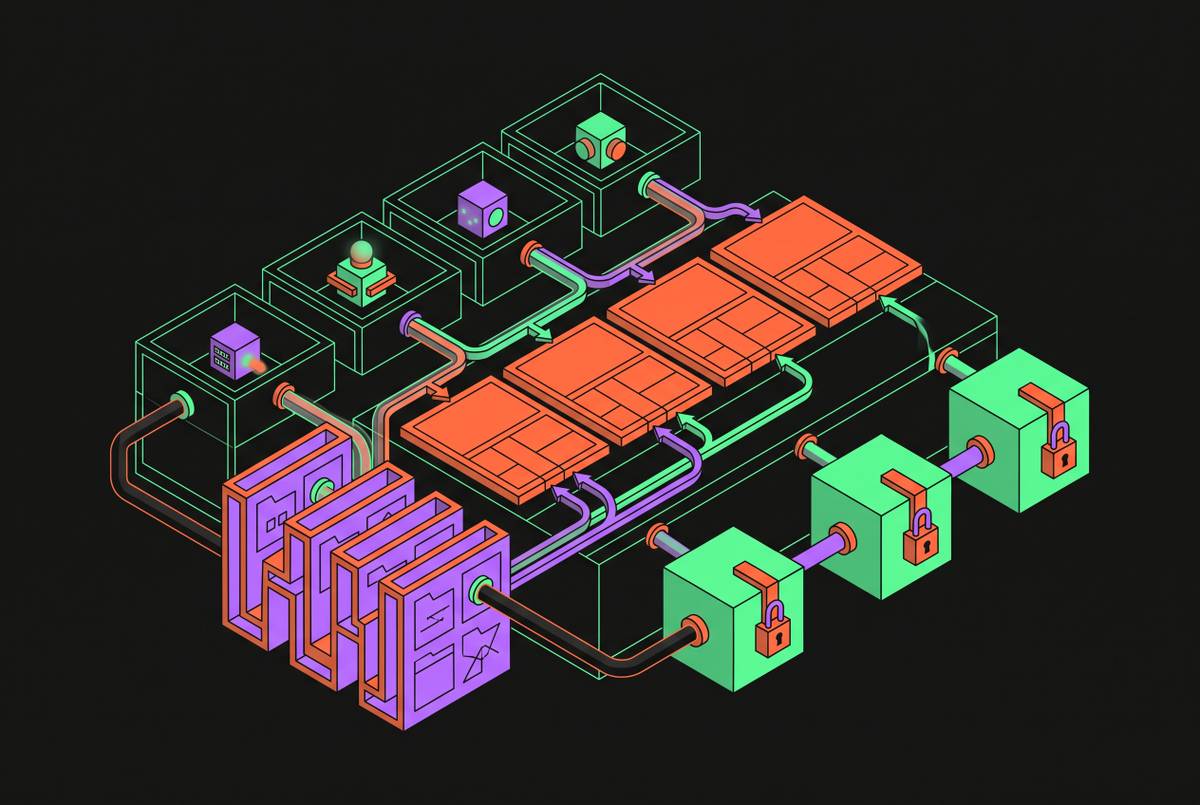
Take execution first. A local session shares the developer's filesystem, their network, their live credentials, with no circuit breaker and no hard stop built in. Production environments need something closer to a microVM or a container spun up fresh per session, so a bad run can't reach past its own walls. Credentials tell a similar story. Local agents tend to inherit whatever's sitting in the environment already, SSH keys, environment variables, an AWS profile that's been active for months, and those credentials outlive the session that used them. A production setup mints a scoped credential when the session starts and kills it the moment the session ends. There's no ambient inheritance to worry about because there's nothing ambient to inherit.
Budget is where local setups get genuinely dangerous. There's no mechanism on a laptop to cap what an agent spends per session, per developer, or over a given stretch of time, so a runaway job that spins in circles calling the API raises costs unnoticed until the invoice arrives. Audit works the same way in reverse: every tool call, every diff, every token needs to trace back to a person or a trigger, and a local session simply doesn't produce a structured log a compliance team could interrogate even if they wanted to. And policy enforcement circles back to that 70% CLAUDE.md compliance rate Claude Code: Workflows and Best Practices 2026 Running AI Agents 24/7 in 2026: Local vs. Cloud vs. Managed — Cost &…. Hooks can push that number higher, but hooks configured on someone's own machine are unreviewed, unversioned, and enforced by nothing but the developer's own diligence Claude Code: Workflows and Best Practices 2026.
None of this is a knock on the model. Claude Code's underlying model doesn't change depending on where it's deployed, locally or in the cloud, it's the same model either way. The gap sits entirely in the harness wrapped around it. Northflank's research finds that 88% of enterprise AI agent pilots never make it to production, and the blocker isn't capability, it's the missing infrastructure, isolation, and compliance layer underneath. Teams are failing for a different reason: the agent can do the work. They're failing because nothing was built to govern it once it started doing the work.
The governance gap in cost and reliability, not just compliance
Cost is where the governance gap stops being abstract. Sonnet 4.6 runs at roughly $3 per million input tokens and $15 per million output tokens, with Opus 4.8 priced higher at $5 and $25. Those numbers look modest for a single session. They stop looking modest the moment several agents run in parallel with no per-session cap, because nothing local catches the spend before it happens, only after.
Reliability compounds the problem instead of offsetting it. Local laptop uptime is around 70 to 85%, pulled down by the same causes as before: reboots, sleep, power interruptions, an unreliable home connection. A self-hosted VPS does better, 99.0 to 99.9%, but that reliability isn't free. Managed hosting clears 99.9% uptime and folds security, monitoring, and update management into the price, so that maintenance labor simply doesn't exist on the customer's side of the ledger.
Even the cloud isn't immune to its own version of this risk. Between 2025 and 2026, the major model providers, OpenAI, Anthropic, and Google among them, logged at least six publicly documented outages that disrupted developer workflows, and standard-tier API keys start hitting rate limits once sustained concurrency crosses roughly 10 requests per second Local AI Coding vs Cloud: Performance Analysis 2026. Cloud infrastructure doesn't eliminate risk. It changes what kind of risk a team is managing, from unattended laptop failure to provider-side throttling, and the second kind is at least visible, documented, and plannable around.
The spending side of this deserves its own scrutiny. Industry research puts 51% of enterprises as already running AI agents in production, and yet projects that 40% of agentic AI initiatives will be canceled by 2027, with escalating costs and weak risk controls cited right alongside unclear business value. That is a governance failure, not a compliance footnote. That's teams building something that works, technically, and then killing it because nobody built the fence around the spend. For any team running agents at real scale, the hidden costs of going local or self-hosted, in labor, in downtime, in the occasional runaway bill, tend to outpace what managed infrastructure would have cost outright. And the failure modes that follow, a missed audit trail, a credential that leaked, a job that ran wild overnight, cost far more than any infrastructure invoice ever would.
What managed cloud infrastructure changes about running Claude Code
The model doesn't change when the infrastructure does. Managed Claude Code deployments run the same models, Sonnet 5 for routine CI work, Opus 5.5 when a task demands complex reasoning across multiple files, that a developer would get locally. What managed infrastructure governs is everything wrapped around that model, not the model's judgment or output quality.
What actually shifts is structural. Each agent session gets its own sandbox, isolated in filesystem, network, and credentials from every other session and from whatever's sitting on the developer's own machine. Credentials get minted the moment a session starts and revoked the moment it ends, which closes off the ambient credentials that local setups can't avoid. Budget caps apply at the session level, the developer level, and across whatever time window a team sets, so spend gets stopped before it happens rather than discovered afterward on an invoice. And every tool call, every diff, every token gets logged in a form that's structured and retrievable, the exact audit trail a local session can't produce.
Agent behavior itself gets defined differently, too. That's the agents-as-code pattern: not a bespoke setup per developer, but a shared, auditable definition the whole team works from. And the trigger surface widens considerably. A managed agent can start from a GitHub event, a PR opening, a CI run failing, an issue getting filed, or from Slack, a terminal, or a direct API call. The developer doesn't need to be at their desk for the agent to start working, which is precisely the capability a laptop-bound setup can't offer.
Run that against the five-dimension framework from earlier: identity, execution, data, and workflow and audit are the gaps managed cloud actually closes, while model control, pinning a specific version so nothing silently upgrades underneath a team, becomes a matter of configuration rather than whatever hardware a given developer happens to be using that week. Agent configuration as code defines agents as YAML config files checked into the repo (reviewed, versioned, and governed the same way any other infrastructure-as-code is governed), reflecting the agents-as-code pattern rather than a bespoke deployment per developer.
CI integration and configuration-driven workflows: where managed agents earn their keep
This is where the abstract governance argument turns into something a team can actually point to in a repo. The official anthropics/claude-code-action@v1 lets Claude Code respond to comments on a pull request, fix a failing CI test on its own, and post a code review, all running on GitHub's own runners with no extra infrastructure required.
Three settings inside that YAML file do most of the heavy lifting. A timeout-minutes value acts as a hard stop against a job that's spinning without making progress. A --max-turns flag, defaulting to 10, caps how many iterations the agent gets before it has to stop and hand control back Local AI Coding vs Cloud: Performance Analysis 2026. And a --model flag pins the exact model version in use, so a provider-side upgrade doesn't quietly change behavior mid-project.
The auto-fix workflow is a good example of governance built into the default rather than bolted on afterward. When Claude Code fixes a failing test, it opens a branch and files a pull request. It does not merge that PR on its own; someone has to configure that step deliberately if they want it. That's a deliberate design choice. That's the whole point: a human stays in the loop by default, and skipping that loop takes a conscious decision rather than an accidental one.
Beyond the official action, community-built orchestration tools push the pattern further, hooking into more than 40 different GitHub events to run parallel workflows, code review, CI triage, issue handling, with triggers, commands, and prompts all defined in a single workflows.yaml file and no code changes needed to adjust them. Some of these tools handle rate limiting automatically, holding a message when a worker's throttled and releasing it once the limit clears, which means the GitHub Actions workflow itself doesn't need custom retry logic bolted on. That's a small thing on paper. It's the kind of small thing a local or self-hosted setup has to build from scratch, because nobody's handed it to them.
The same discipline extends to how commands themselves get stored: as Markdown files inside .claude/commands/, some carrying YAML frontmatter, all of it reusable, reviewable, and tracked in version control the same way any other file in the repo is. Put together, this is the practical payoff of the agents-as-code approach: the same PR reviews, CI triage, and refactor work a developer already runs by hand locally can run on its own, triggered by events, across a whole team, but only once the sandboxing, the credentials, and the budget caps are actually in place to make that safe.
Deciding between local Claude Code, self-hosted infrastructure, or a managed cloud platform
The decision isn't really about preference. It runs in a fixed order: compliance requirements first, cost economics second, and team capability third, not the other way around.
Local Claude Code earns its place when a single developer is sitting at the keyboard for every session, present the whole time, nobody else waiting on the output. It fits proof-of-concept work, where the goal is figuring out what the agent can even do rather than shipping something. It fits situations with no regulated data in play and no team-wide audit requirement hanging over the work. And it fits when volume stays low enough that a 70 to 85% uptime figure is genuinely fine to live with, because nobody's counting on the agent running while they sleep.
A self-hosted VPS becomes the right call once a team has real DevOps capacity and specifically wants to hold onto full control over the stack. It also fits when compliance requires data to sit on infrastructure the team owns outright, or when a configuration genuinely can't be replicated on someone else's managed platform.
Managed cloud is the right answer once agents start running unattended, triggered by CI events, or serving more than one developer at a time. It's the right answer once audit logs, scoped credentials, and enforced budget caps stop being nice-to-haves and start being requirements, whether that requirement comes from a compliance team, a security lead, or an engineering manager who's already been burned once by a job that ran wild. It's also the right answer for teams that want agents defined as code, reviewed and versioned the same way the rest of the stack is, instead of living as a private setup on each developer's own machine.
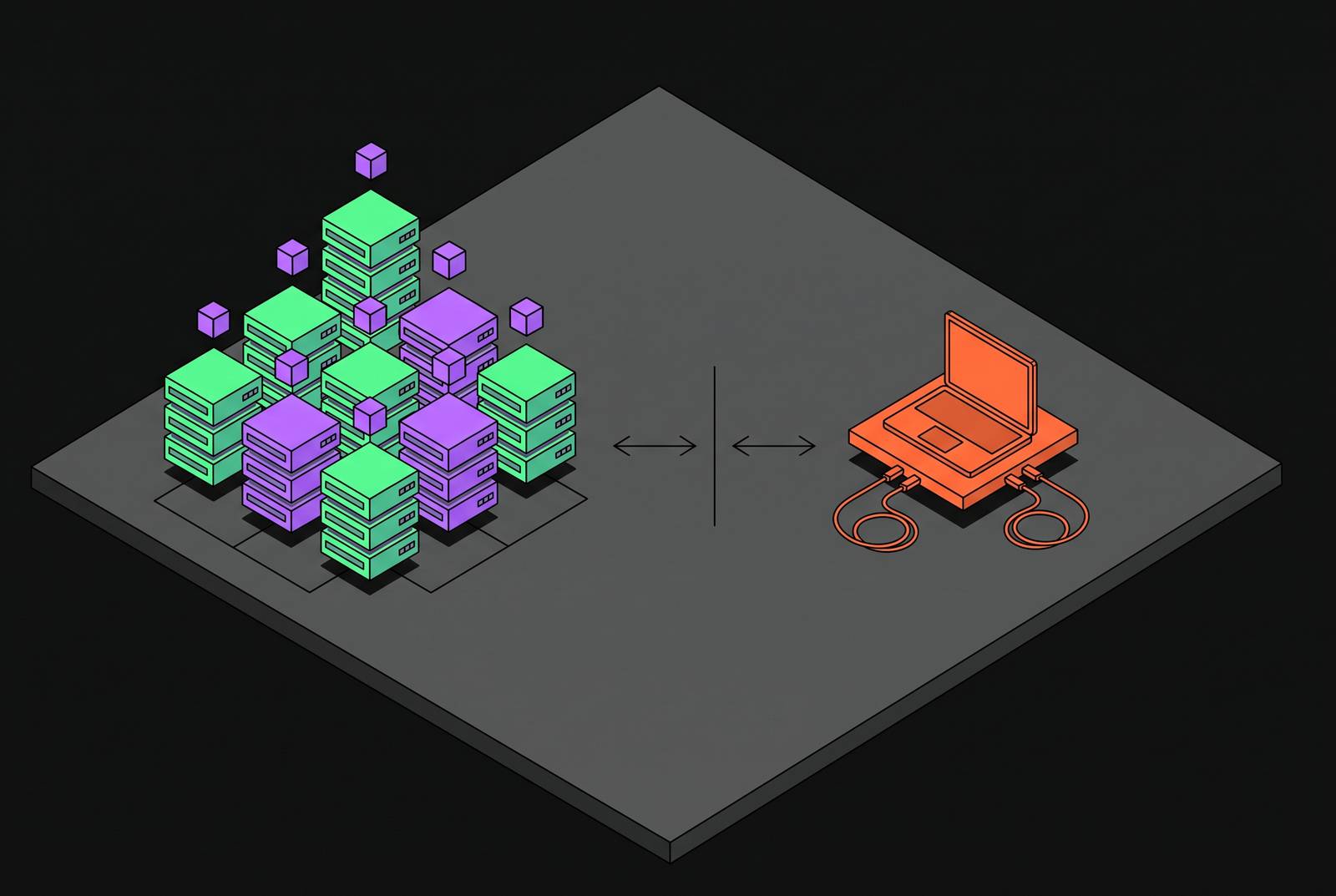
None of this has to be an either-or choice made once and locked in. Hybrid patterns are common and legitimate: local for interactive daily development, managed cloud for unattended CI agents, event-driven automation, and any workflow that touches production systems. That split is a deliberate match between the tool and the moment's demands. It's just matching the tool to what the moment actually demands, which is the same discipline good engineering has always required, agent or no agent. True cost comprises infrastructure at $21–$40/mo plus developer time at 2–4 hours/month of ongoing maintenance, which at $50/hour amounts to $100–$200/month in hidden labor, dev.to/deployagents reports Local AI Coding vs Cloud: Performance Analysis 2026 Claude Code for Enterprise, Ship to Production with Clarista. Speed to production matters: cloud deployments aligned with production timelines under 3 months when the provider supplied managed runtime components, augmentcode.com reports.
Sources
- Running AI Agents 24/7 in 2026: Local vs. Cloud vs. Managed — Cost & Infrastructure Deep Dive - DEV Community
- Local AI Coding vs Cloud: Performance Analysis 2026
- Enterprise AI coding agent deployment in 2026 | Blog — Northflank
- Claude Code: Workflows and Best Practices 2026
- 8 Claude Code Workflows With Real Use Cases (2026)
- Claude Code for Enterprise, Ship to Production with Clarista
- Claude Managed Agents overview - Claude Platform Docs
- Claude Code Adds Dynamic Workflows for Parallel Agent Coordination - InfoQ