Budget Caps and Spend Controls for LLM-Powered Agent Sessions
Hard budget caps must sit in the execution path to stop runaway agents before overspend happens.

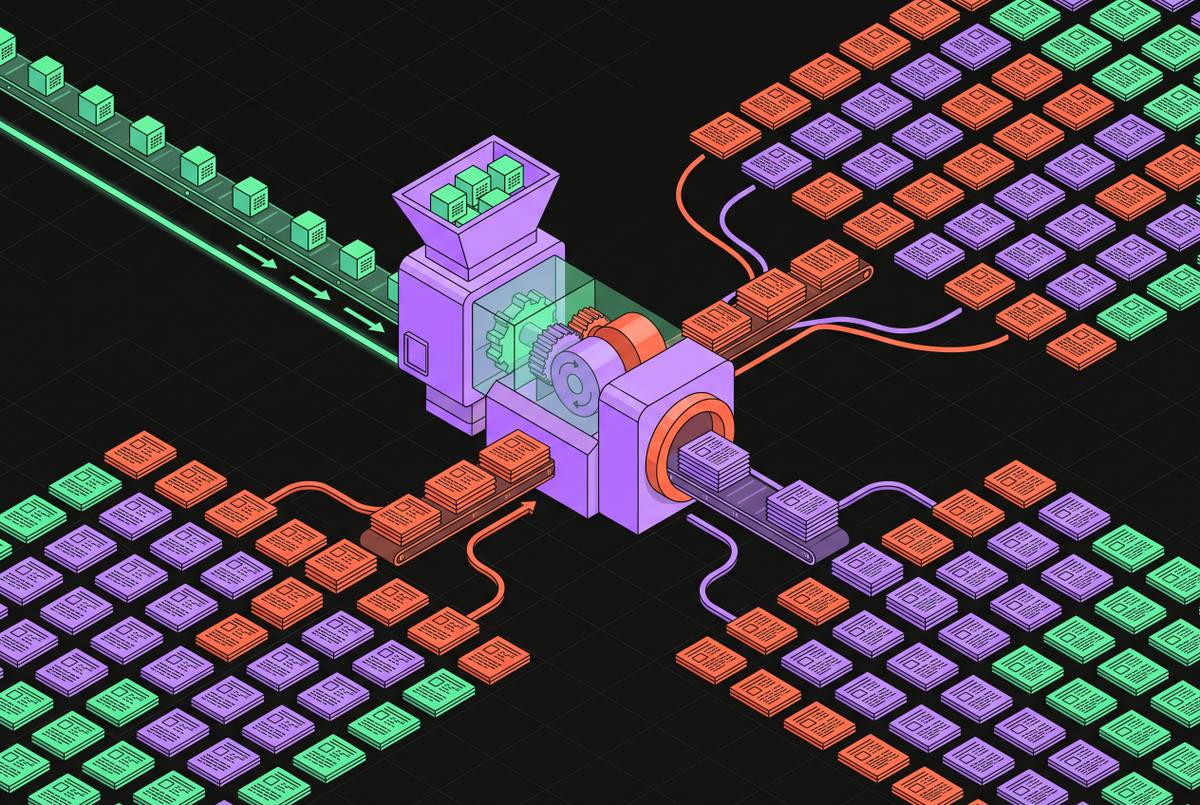
Budget caps on agent sessions are not a line item for the finance team to review at month's end. They are a safety mechanism, and the reason comes down to how agent spend actually accumulates. A single chatbot exchange only runs through a few thousand tokens before it ends. A single agent task, by contrast, chains together planning steps, tool calls, and verification loops, and that chain can consume tens of thousands to hundreds of thousands of tokens before it produces anything usable. Per-task token volumes in production deployments in 2026 run orders of magnitude above what a conversational exchange ever touches, and that gap is the whole reason ordinary API monitoring was never built to catch what agents do.
The traffic pattern is the trap. A runaway agent loop does not look like abuse to a rate limiter. It looks like an agent doing its job: calling a model, calling a tool, checking the result, calling the model again. Nothing about that pattern trips a threshold built to catch spikes or floods, because the loop stays inside normal operating parameters the whole time it burns through budget. Spend accumulates quietly, inside the shape of expected behavior, so the systems built to flag unusual traffic have nothing unusual to flag.
Where that spend concentrates matters too. Response tokens, the model's output including any reasoning tokens it generates along the way, are priced at a significant multiple of input tokens on most providers. That makes the response layer the most expensive part of any call, exposed most when an agent starts reasoning in circles, second-guessing a correct answer, or drafting and redrafting a plan it already finalized. If a model talks itself through the same problem five times, it pays the output-token price five times over.
None of this requires a dramatic failure to become expensive. Each step looks cheap in isolation. The aggregate is not visible until it's already spent, which is the condition every later section in this piece responds to: by the time spend looks high on a dashboard, the agent may already have burned through the budget that was supposed to contain it.
Monitoring's failure: the gap between observing spend and stopping it
Dashboards and spend alerts tell a team what already happened. They do not have the authority, or the position in the system, to stop a run while it is still executing. That distinction, between observing and enforcing, is the one that decides whether a runaway agent gets caught in time or gets caught in the invoice.
A monitoring system answers one question: what did this cost? An enforcement system answers a different one: should this next step be allowed to run? Only the second kind of system can interrupt a loop mid-run, because it sits in the path of execution itself. A tool that reports spend after the fact has no mechanism to say no to the next call, no matter how clearly the trend line points toward disaster.
Alert lag makes the gap worse than it sounds. It is a story about what happens when thousands of well-behaved agent sessions, each individually unremarkable, scale faster than a monitoring-and-manual-intervention posture can track.
The conclusion follows directly. If the problem is that alerts arrive too late to matter, the fix cannot be a faster alert. The control has to live inside the execution path itself, built into the moment a step is about to run, not stationed beside the pipeline waiting to report on it afterward.
Budget caps as a safety primitive: stopping runaway loops, prompt injection spend, and recursive failures mid-run
A hard per-agent budget cap changes what kind of thing a dollar limit is: it stops functioning as a planning number and starts functioning as a safety primitive, the same way a circuit breaker in an electrical panel exists to stop a short from burning down the building, not to track your power bill. A cap on an agent session does the equivalent job: it bounds the worst-case outcome of a recursive failure, a prompt injection attack that tries to redirect the agent into expensive, attacker-chosen behavior, or a malformed task that sends the agent into a planning loop it can't escape. Without the cap, any of those failure modes can run until something external stops them. With the cap, the ceiling is fixed at the cap amount, full stop.
That ceiling buys something monitoring never could: predictability. With a per-agent cap in place, the maximum daily spend for a fleet of N agents is N times the daily cap, a number a finance team or an engineering lead can state with confidence before the day starts. Cost becomes a bounded variable, planned around in advance.
The financial risk follows from an operational one. An agent that loops through planning steps, keeps retrying a tool that's failing for a reason it can't diagnose, or escalates to a more expensive model because its first answer looked uncertain is draining its task budget before it has produced anything useful. The money is secondary to what's actually happening: quality degrades, the odds of the task completing drop, and by the time someone notices, recovering the task costs more than preventing the spiral would have.
A reasonable objection arises: why not set a monthly spend alert and have someone step in when it fires? The math doesn't support it. The intervention window for a human reacting to an alert is minutes at best, and a long-context agent operating at full speed can generate substantial additional spend inside that window before a person even reads the notification, let alone acts on it. Controls that depend on a human noticing and reacting in real time are not controls for this problem. The only mechanism that holds up is one that is automatic and pre-execution, deciding whether the next step is allowed before that step ever runs.
The six dimensions a single dollar cap misses
A single master dollar cap catches problems too late, after most of the damage is done. The dollar figure is a lagging indicator of problems that started somewhere else. Real enforcement needs six separate dimensions working together, and each one catches a different failure shape before it turns into spend.
Token ceilings come first: per-call and cumulative limits on input tokens, output tokens, and total tokens for a task, set at the infrastructure layer, so prompt bloat and context-window failures get caught structurally rather than discovered as a side effect of a bigger bill.
Model-call limits cap the number of times an agent is allowed to invoke a model within a run, for example 12 calls per run and 3 calls for any single step, which catches a planning loop that keeps calling the model to reconsider the same decision before that loop has had the chance to accumulate meaningful cost.
Tool-call limits apply independently to each tool type, because a web search, a database write, and a call to an external API carry different cost profiles and different risk profiles, and bounding them together hides which one is actually driving a runaway pattern.
Retry budgets treat retries as a resource with a ceiling, not a fallback with no limit. Tool-specific retry caps stop retry storms before they start, and this is a category that ordinary observability can miss entirely if the telemetry only counts the user-facing request and never looks inside at what the agent tried and discarded along the way.
Dollar caps remain the hard monetary ceiling per task and per session, enforced at the gateway layer specifically so the agent has no path to bypass it regardless of how it's instructed or what it attempts.
Each dimension closes a gap the others leave open. And the controls need to apply at three levels at once: the run as a whole, the individual step, and the individual tool call, because runaway loops and retry storms are not edge cases an engineering team might encounter. They are predictable failure modes that occur reliably once an agent operates at scale.
Layered enforcement: budget managers, reservations, and circuit breakers
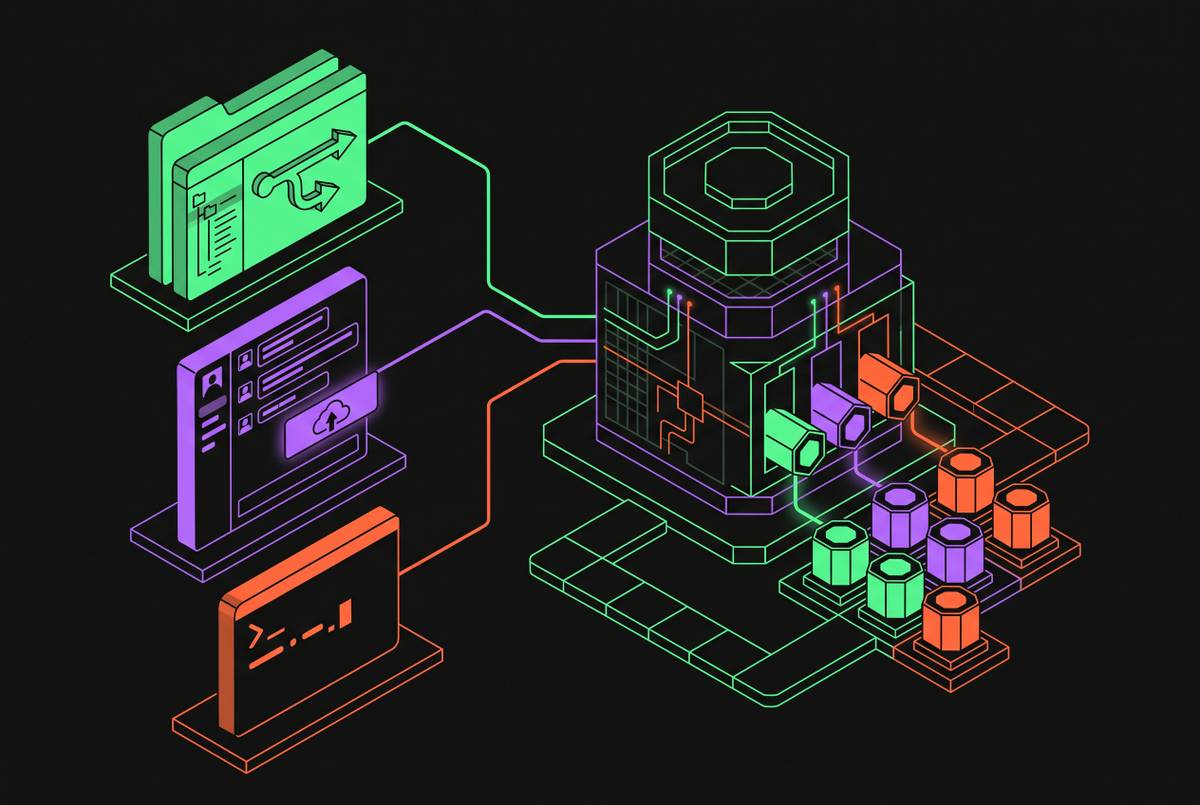
To translate six dimensions into a working system, you start with a central budget manager, a component that sits in front of every model call and tool call and decides, before execution, whether that call can happen. This is the architectural piece that makes the difference between a system that reports spend and a system that enforces it: the check happens before the call, not after.
The pattern is a reservation, not a counter. Before any step runs, the worker requests approval from the budget manager. The manager estimates the projected cost of the call, accounting for prompt tokens, expected completion tokens, tool fees, and retry exposure, then creates a reservation against a shared cost ledger and either approves or denies the request based on whether the projected spend would break any of the limits in place. Once the call completes, the manager reconciles the reservation against actual usage and logs the result: run ID, step ID, projected cost, actual cost, and remaining budget. That log lets a team reconstruct exactly where an agent's budget went, step by step.
Redpanda's Agentic Data Plane documentation shows what this looks like as a running system. A budget there caps LLM spend over a recurring period for a given agent. Once that agent's spend for the period hits the hard limit, the AI Gateway rejects its next LLM request with an HTTP 429 response until the period resets. The error body is formatted to match the provider's own rate-limit convention, so client SDKs handle it the same way they'd handle any other rate limit: the OpenAI format returns a code of budget_exceeded, Anthropic returns rate_limit_error, Google returns RESOURCE_EXHAUSTED, and Amazon Bedrock returns ThrottlingException. An agent hitting a budget wall looks, to its own client code, exactly like an agent hitting a provider's ordinary rate limit. No special-case handling is needed on the client side to respect the cap.
A warning threshold sits below the hard limit as a separate signal. When spend crosses that lower threshold, the response carries a SpendLimit-Warning header and a warning metric, but it still goes through. That gives a team a reaction window, a chance to look at what's driving spend before the hard cutoff arrives, which matters because the threshold has to sit strictly between zero and the limit to do any good.
Fleet-wide defaults and per-agent overrides give this system shape at scale. A default budget gives every agent in a fleet its own independent spend pool, so one agent hitting its cap doesn't starve or throttle any other agent in the fleet. If a team wants a different ceiling for a high-volume or high-risk agent, a per-agent override can target that agent by name and replace the default for it alone, without touching policy for everyone else. Adding an override mid-period inherits the current spending window rather than resetting it, so an agent can't be handed fresh runway simply by having its override recreated partway through a period.
What makes all of this work is where the enforcement sits. The cap lives at the gateway layer, not inside application code. The agent has no path around it. It doesn't matter what the agent is instructed to do, what a prompt injection tries to coax it into, or what a buggy planning loop attempts. The gateway sits between the agent and the model provider, and it has no obligation to let a request through just because the agent wants it to.
Dynamic downgrade rules and graceful termination when the budget runs low
A hard cap is the last line of defense, and the systems that handle budget well put several intervention points ahead of it. As a task's remaining budget shrinks, a well-built system shifts behavior in stages, trying to reach a usable result before it ever has to invoke the hard limit.
The staged sequence starts with model selection. The goal across all three moves is the same: arrive at a usable partial result before the task ever reaches the hard stop.
Termination matters as much as the stop itself. If the remaining budget cannot cover the next step, production teams end the task cleanly, return whatever partial work exists, and state what's left undone. Clarity about what wasn't finished beats a half-finished task pretending to be complete.
Context compression does a different job than the hard cap, so it needs separating from it conceptually. It doesn't enforce the ceiling. It pushes the ceiling further away because it makes each remaining call cheaper.
None of this is a quality compromise when staged correctly. Most steps inside an agent workflow, classification, extraction, formatting, routine planning, don't need frontier-model reasoning to execute well. Reserving the most capable (and most expensive) model for complex synthesis, architectural decisions, and final review, while routing the routine work to a cheaper tier, is the design a well-run agent system should use from the start, with budget pressure simply forcing the point sooner. A team that defines these downgrade rules before launch is the team that walks away from a tight budget with a usable partial result.